Projection Lenses Explained: Fixed, Variable, and Custom Optics for Unique Spaces
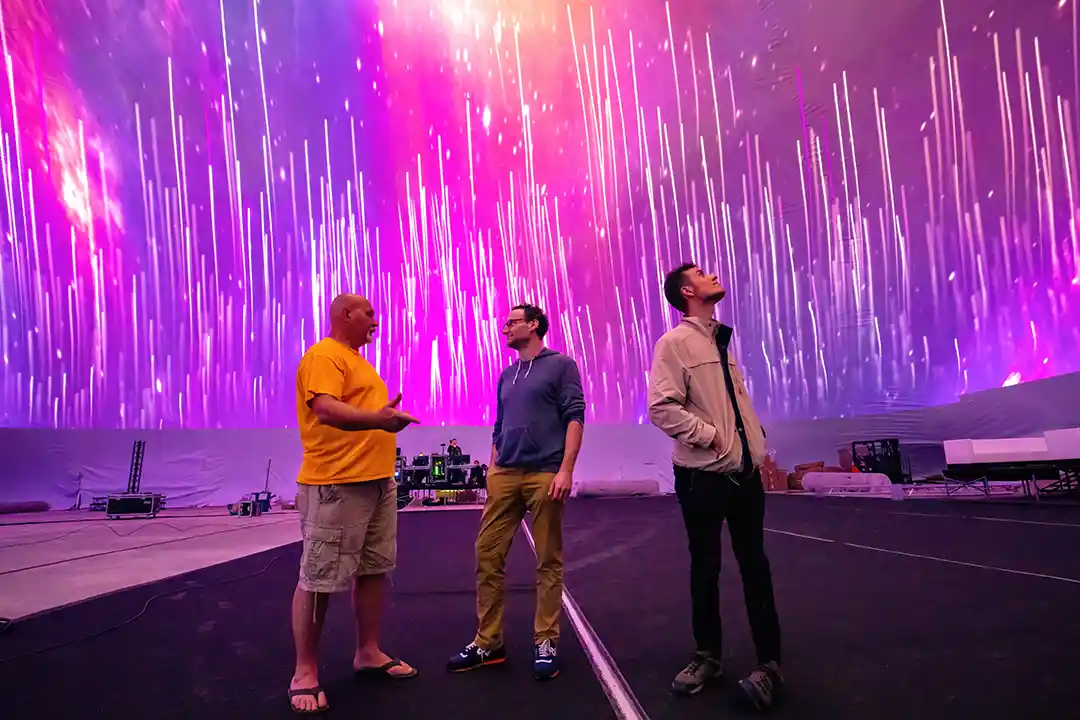
Immersive events and experiential installations rely on more than powerful projectors. The projector lens is just as important. At Lumen and Forge, we match lens types to the venue so visuals land exactly where they should, whether we are wrapping a 360° dome, projection-mapping a façade, or building an interactive tunnel.
This guide breaks down the three lens families you will see most in live environments: fixed lenses, variable zoom lenses, and custom optics. We will keep the language plain, include the key tech details, and share how each option plays out on a real show site.
If you are new to AV, this will give you a solid foundation. If you are technical, you will find the specs and use cases you need to make confident choices.
Throw Ratio Explained
Throw ratio tells you how far a projector needs to be from the surface to create a certain image width. It is a simple formula: distance to screen divided by image width.
A lower throw ratio means you can place the projector close to the surface and still get a large image. This is what people mean by short throw. A higher throw ratio means the projector needs to be farther away. That is long throw.
Here is a quick mental model. A 1.5:1 lens needs 15 feet to create a 10-foot-wide image. For every 1.5ft of distance you get 1 ft of screen. A 0.5:1 lens creates that same 10-foot width from only 5 feet away. Most large-venue projectors accept interchangeable lenses, so once you know your throw ratio, you can select the lens that fits the space without moving the projector.
In the field, we start with measurements, not guesses. We confirm the available mounting distance, the target image size, and any obstructions. From there, we choose the lens that hits the throw ratio and keeps the beam clear of people, scenery, and rigging.
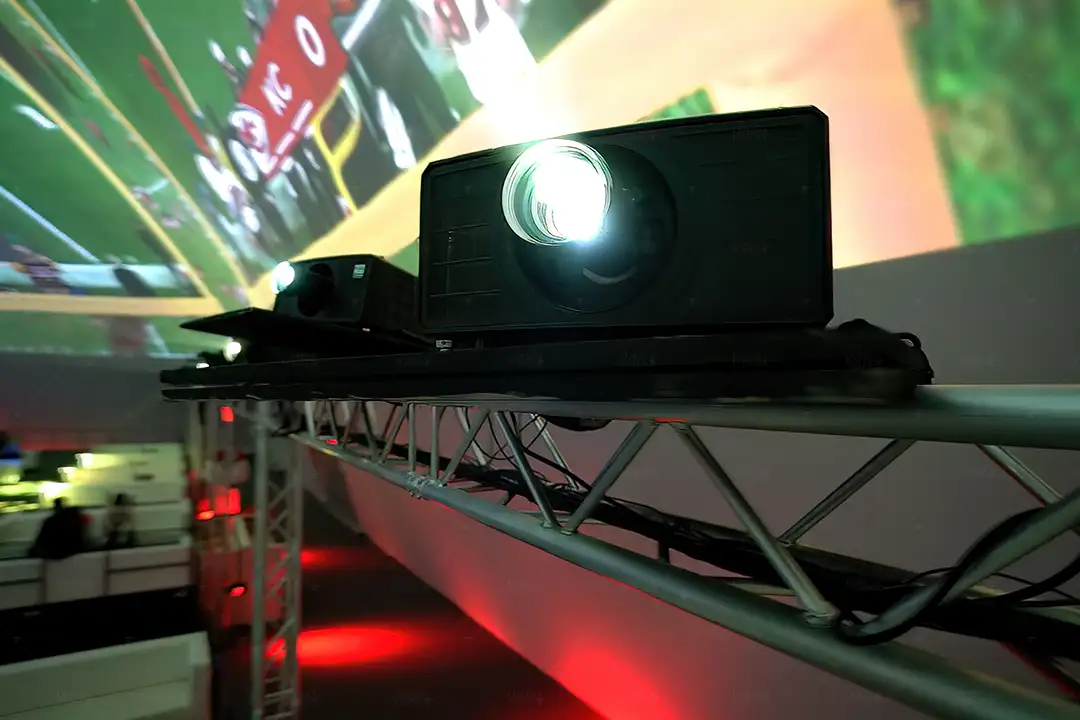
Zoom Lenses / Non-Zoom (Fixed / Prime) Lenses
Zoom lenses provide a range of focal lengths, allowing installers to adjust the image size and throw distance without physically moving the projector. This flexibility makes them highly practical in multipurpose venues, auditoriums, and event spaces where projector placement may vary or need fine-tuning.
Modern zoom lenses are engineered to maintain excellent sharpness and brightness across their range, making them the most versatile choice for many professional projection setups.
Why we use them
Prime lenses (non-zoom, single focal length) are used when the space requires a very specific throw ratio that a standard zoom lens cannot achieve. They are especially valuable at throw extremes or in specialized simulation environments. Examples include ultra-short setups in compact rooms and immersive shapes such as domes, quarter spheres, or full spheres.
In ultra-short throw applications, many prime lenses incorporate mirror assemblies to bend light at sharp angles. For example, Panasonic’s ET-DLE035 is a 0.38:1 UST lens designed to project a wide image from very close range by bouncing light off a parabolic mirror. This approach allows installations in small projection rooms, immersive domes, or under-balcony installs, keeping projectors hidden and out of foot traffic while still delivering clean geometry and high brightness.
Strengths and trade-offs
A fixed lens is designed for one focal length and can often deliver high image quality. The trade-off is flexibility. If the venue changes or the mount point moves, you cannot dial the image with zoom. The placement must match the lens. When the plan is locked and the geometry is tight, a fixed lens that fits the throw can be the cleanest, brightest choice.
Variable (Zoom) Lenses
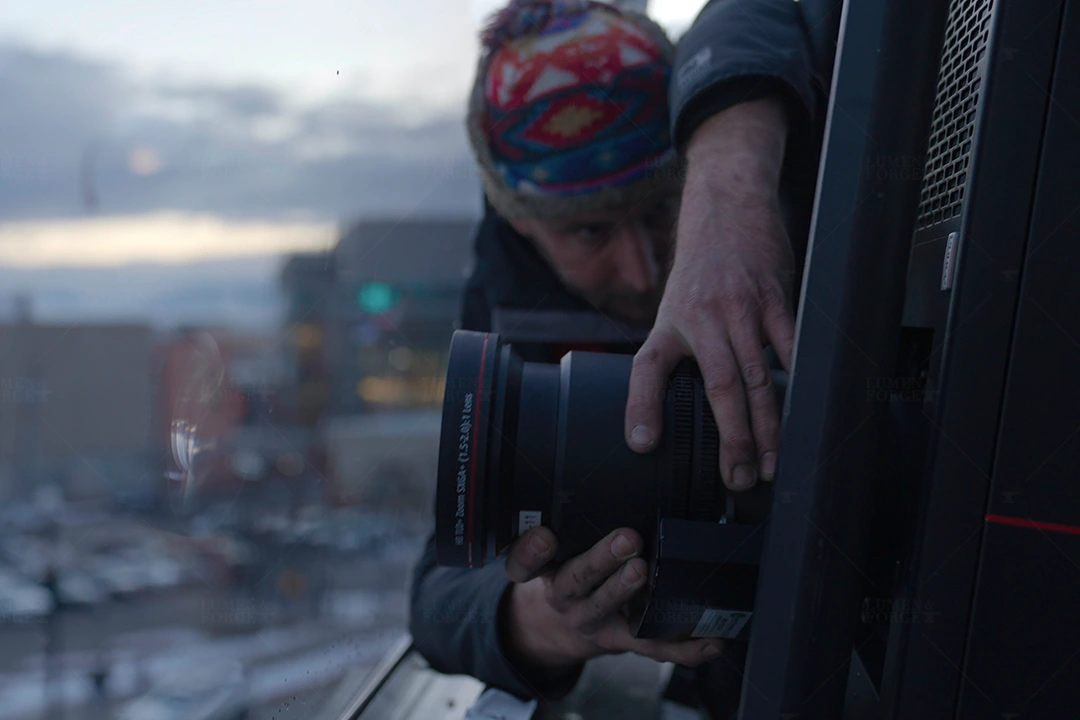
Zoom lenses are the everyday tools of live events because they give you room to adapt. With an adjustable throw range, you can mount once and then dial the image to fit the final set, stage, or architectural canvas. That flexibility pays off when venue dimensions change, scenic grows, or doors and truss placements shift during load in.
The key with zoom is to plan where you sit in the range. Staying near the middle preserves brightness and focus uniformity, and it leaves you adjustment headroom for fine trims. Treated this way, a good zoom lens becomes a reliable workhorse that travels well from show to show.
Why we use them
Zoom lenses are the workhorses of live events. They let us lock in a practical rigging position, then fine-tune the image to the screen or mapped surface. This is essential when you are adapting to different stage plots, audience layouts, or ceiling heights from venue to venue.
Panasonic’s ET-DLE series, Barco’s FLD and FLD+ families, and Christie’s installation lenses cover short, mid, and long throws. In practice, we pick the lens that lands near the middle of its range at the planned mount point. That approach preserves brightness and gives us room to trim image size during focus.
Strengths and trade-offs
Zoom flexibility is the win. The watchouts are brightness and edge performance at the extremes. Many lenses deliver slightly less light at maximum telephoto than at the wide setting. High-quality glass from Panasonic, Barco, and Christie minimizes these effects, but it is still smart to plan your zoom position, not max it out.
Custom Optics for Unique Spaces
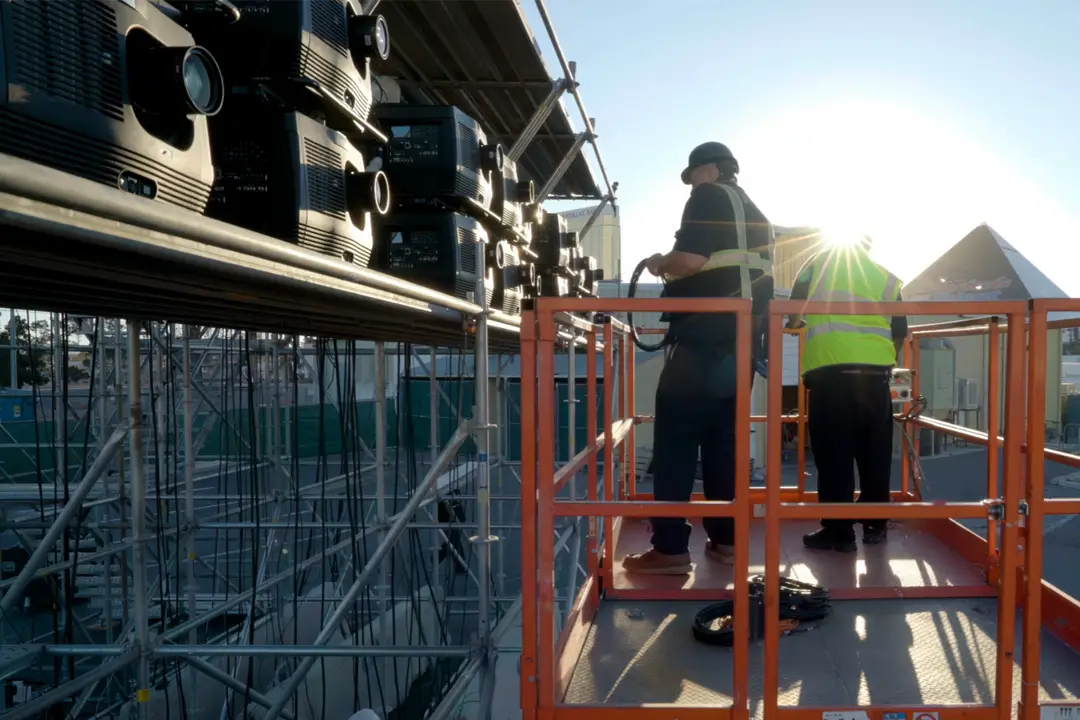
Some rooms do not play by standard rules. Domes, tunnels, mirrored halls, and floor-to-ceiling galleries can demand optics that bend light in unusual ways. Custom or specialty lenses solve these problems by expanding field of view, folding the optical path, or changing offset so guests can approach the image without casting shadows.
When a concept requires it, custom optics let you keep projectors hidden and the experience intact. They reduce blend seams in hemispheres, unlock projection in inches-deep cavities, and make shadow-free walls possible in high traffic exhibits. The result is a cleaner picture and a more believable world for the audience.
Fisheye and dome coverage
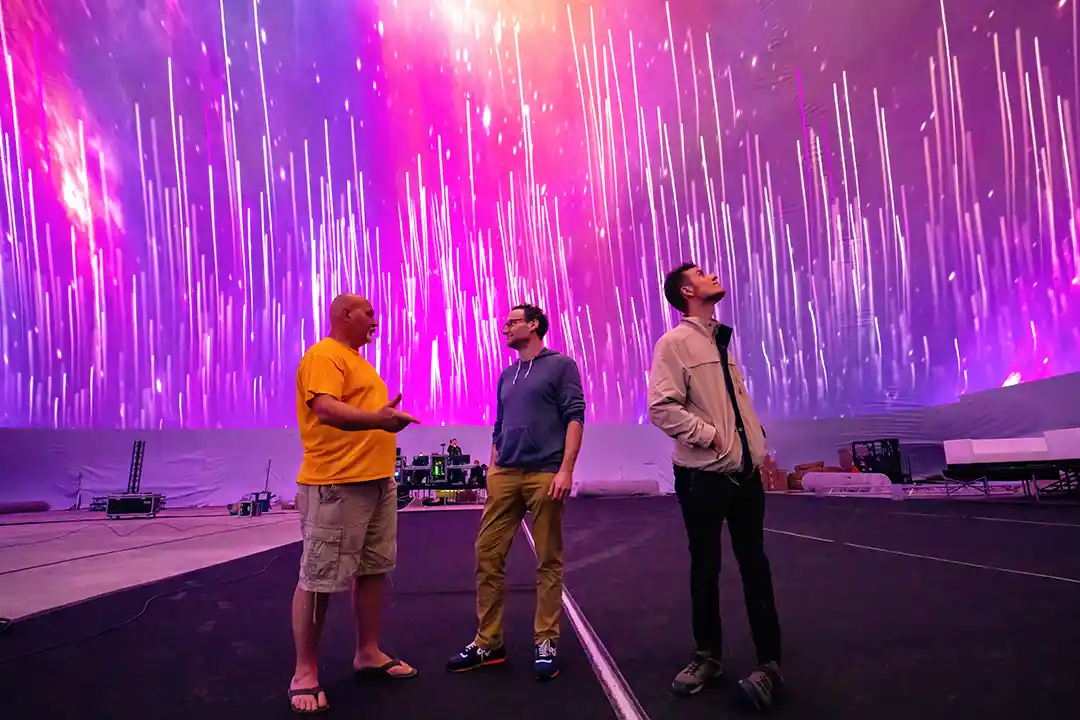
For hemispherical coverage, a specialty fisheye lens can fill a dome with a single projector. Lenses like the Navitar HemiStar series deliver extreme fields of view, which reduces the number of projectors and the number of blend seams. You will need a bright projector because one unit carries the full load, but the result is a seamless, wraparound canvas.
Periscope and ultra-short throw
In tight rooms where projectors must sit inches from the surface, periscope-style ultra-short throw lenses let you aim light around physical constraints. Barco’s EN68 is an example of a UST lens built for extreme proximity, with an optical path that bends light to throw a large image at a very low ratio. This unlocks floor-to-ceiling imagery in galleries, retail windows, and compact interactive rooms where a conventional beam would be impossible.
Shadow-free, guest-friendly installs
Some attractions need guests to stand inches from the content without casting shadows. That requires both short throw and clever offset. In these cases, we look for custom lenses with zero or near-zero offset that can sit at floor level and still fill wall height. The goal is simple. Let visitors lean in, explore, and never block the story.
Ride systems and simulators
Theme parks and simulators often rely on bespoke optics to increase brightness, preserve pixel detail across curved screens, or fit within tight mechanical envelopes. These designs may combine large apertures, folded optical paths using mirrors or prisms, and unusual zoom ranges to deliver edge-to-edge focus on complex surfaces. The outcome is higher image quality with fewer projectors and fewer compromises in content design.
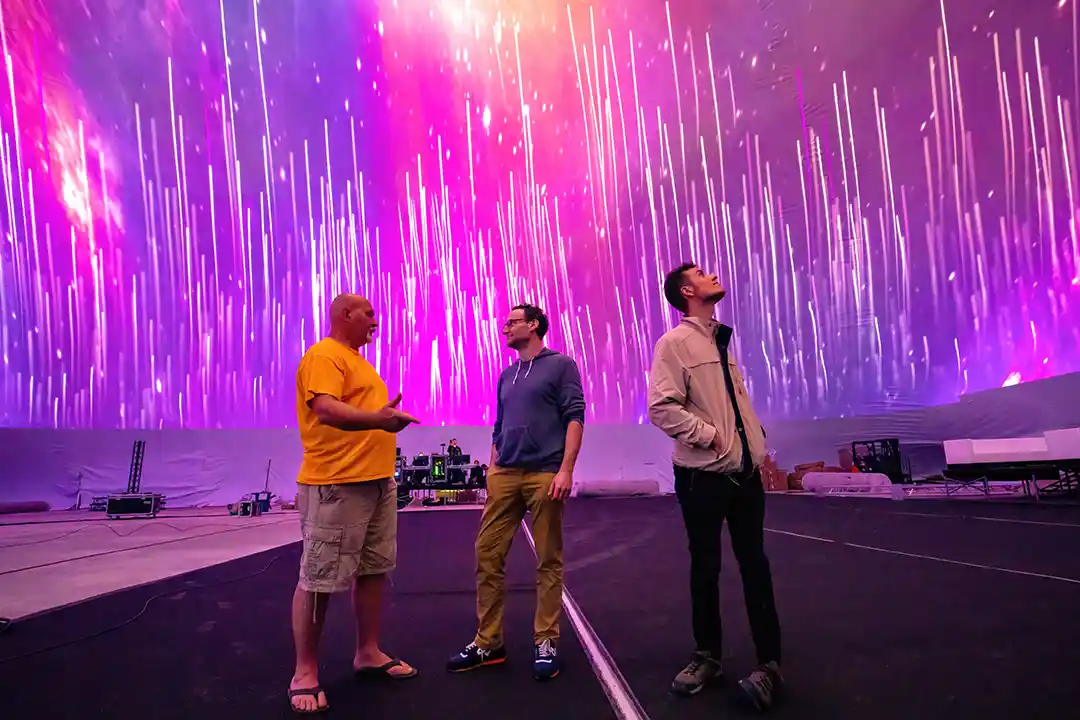
How We Choose Lenses For Real Spaces
Choosing the right lens is part math, part storytelling, and part logistics. We translate the venue into measurements and sightlines, then map those constraints to lens families that preserve brightness, minimize shadows, and leave room for fine adjustment.
From there, we pressure-test options against the creative brief and the realities of load in, guest flow, and content resolution so the image looks as good on site as it does in previsualization.
Start with measurements, not assumptions
We measure throw distance, target image width and height, ceiling height, rigging positions, and sightlines. From those numbers we calculate the required throw ratio, then shortlist lenses that hit it with room to spare.
Match the lens to the mounting plan
If the projector must live on a balcony or in a rear booth, a long-throw zoom is usually the move. If it needs to hide near the surface, we look at short-throw or ultra-short-throw options. Where geometry is fixed and tight, a fixed lens can give us the cleanest result.
Plan for brightness and color
Lens choice affects brightness. Telephoto settings typically deliver less light than wide settings. We factor that into lumen budgets, especially for edge-blended arrays. Wherever possible, we keep multi-projector systems on the same model with the same lens family to maintain color and brightness consistency across the image.
Mind the people and the path of light
In interactive spaces, guests should never stand in a beam. Short-throw or periscope lenses help keep light above or below the action. In domes and wraparound rooms, specialty optics reduce shadow risk by keeping hardware out of the audience footprint.
Use the brand families that fit the brief
We frequently deploy Panasonic projectors with ET-DLE lenses, Barco bodies with FLD and FLD+ lenses, and Christie installation lenses for large venues. Each ecosystem offers reliable coverage from ultra-short to long throws, with proven service and support behind them. When a concept needs more than a catalog can provide, we explore custom or third-party optics that meet the geometry and the creative intent.
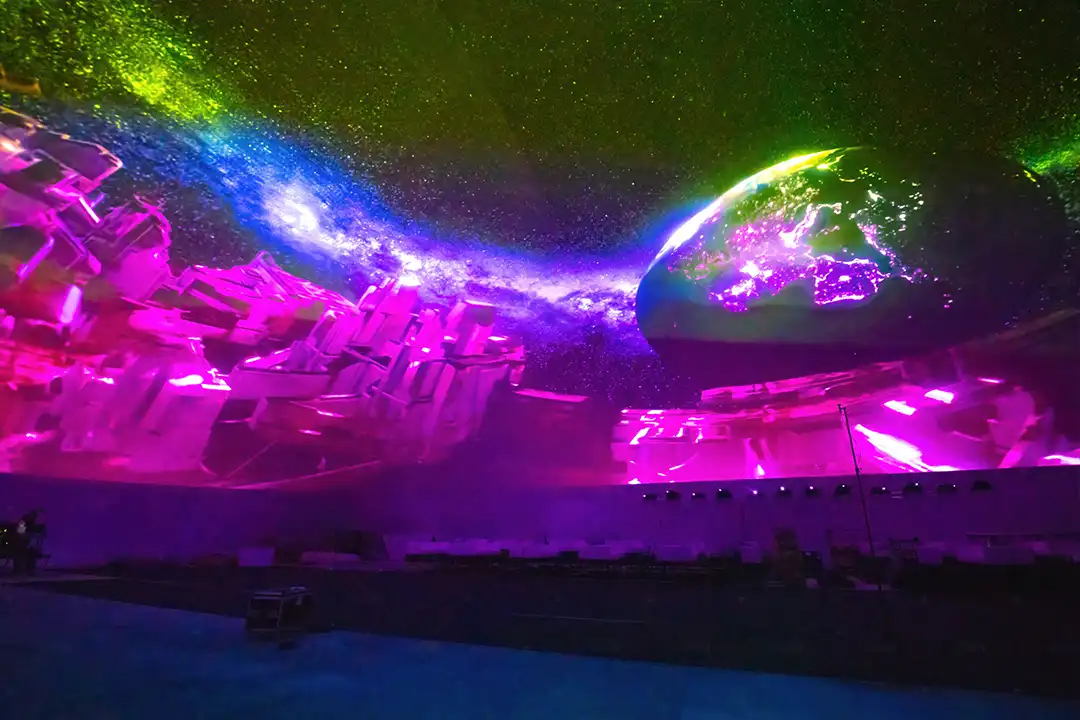
Quick Guidelines By Lens Type
Use this as a fast decision aid before you dive into model charts. It will point you toward the right family based on space, flexibility, and guest interaction, then you can select exact lenses that hit your numbers.
Fixed lenses
Use when the throw is extreme or the placement is locked. Expect excellent sharpness with fewer moving parts. Plan the mount to match the lens, not the other way around.
Zoom lenses
Use when you need flexibility from show to show or when the exact mount location is still in flux. Choose a zoom range that lands you near the middle of the lens, not at the edge, to protect brightness and focus.
Custom optics
Use when the space is unconventional or the experience demands shadow-free interaction at very close range. Expect higher cost and tighter integration. The payoff is a clean, believable picture where standard optics would force compromises.
If you are choosing between two options, favor the lens that keeps you near the middle of its range, avoids beams in walkways, and preserves brightness for the content you plan to show. That simple rule will save time on site and protect image quality when the room and the show get real.
Bring the Right Lens, Bring the Room to Life
Great projection is not an accident. It is the result of careful measurements, the right lens, and smart positioning. When the optics match the space, content feels natural, the audience can move freely, and the illusion holds.
If you are scoping a dome, a mapped facade, a pop up activation, or a permanent exhibit, we can help you specify lenses that fit the geometry and the story. The right choice up front saves time on site, protects image quality, and turns a good idea into an experience people remember.
Lumen and Forge designs, engineers, and installs complete projection systems. Our services include lens and projector specification, 3D previsualization, content creation, media server programming, rigging and power planning, installation, edge blending and color calibration, show control, and on site operation with ongoing support. We also provide domes, interactive sensors, holographic displays, and custom optics when your space calls for something special.
Ready to bring your space to life with the right lens plan and hardware stack? Contact Lumen and Forge to schedule a quick consult and get a practical specification with projector options, lens recommendations, and a lumen budget tailored to your venue.
How to Choose the Right Projector for Your Immersive Installation
Projection Mapping
October 08, 2025
{"article_title":"Choosing Projectors for Immersive Spaces","author_organization":"Lumen and Forge","summary":"A comprehensive guide on matching...
Blending Multiple Projectors: Creating Seamless Large-Scale Visuals
Projection Mapping
October 02, 2025
{"article":{"title":"Edge Blending: Creating Seamless Immersive Canvases","meta":{"author":"Lumen and Forge","topic":"Projection...
HD, WUXGA, or 4K Projectors For The Best Immersive Experience: Which Is The Better Option?
Projection Mapping
September 09, 2025
{"article":{"title":"HD vs. WUXGA vs. 4K: Choosing the Best Projector Resolution for Immersive Experiences","meta":{"author":"Lumen and...
Interactive Trade Show Booth Ideas That Attract and Engage Attendees
Immersive Experiences
July 25, 2025
...
Get In Touch
Get In Touch